KFC Grilled Chicken vs. Original Recipe: A Nutritional Breakdown

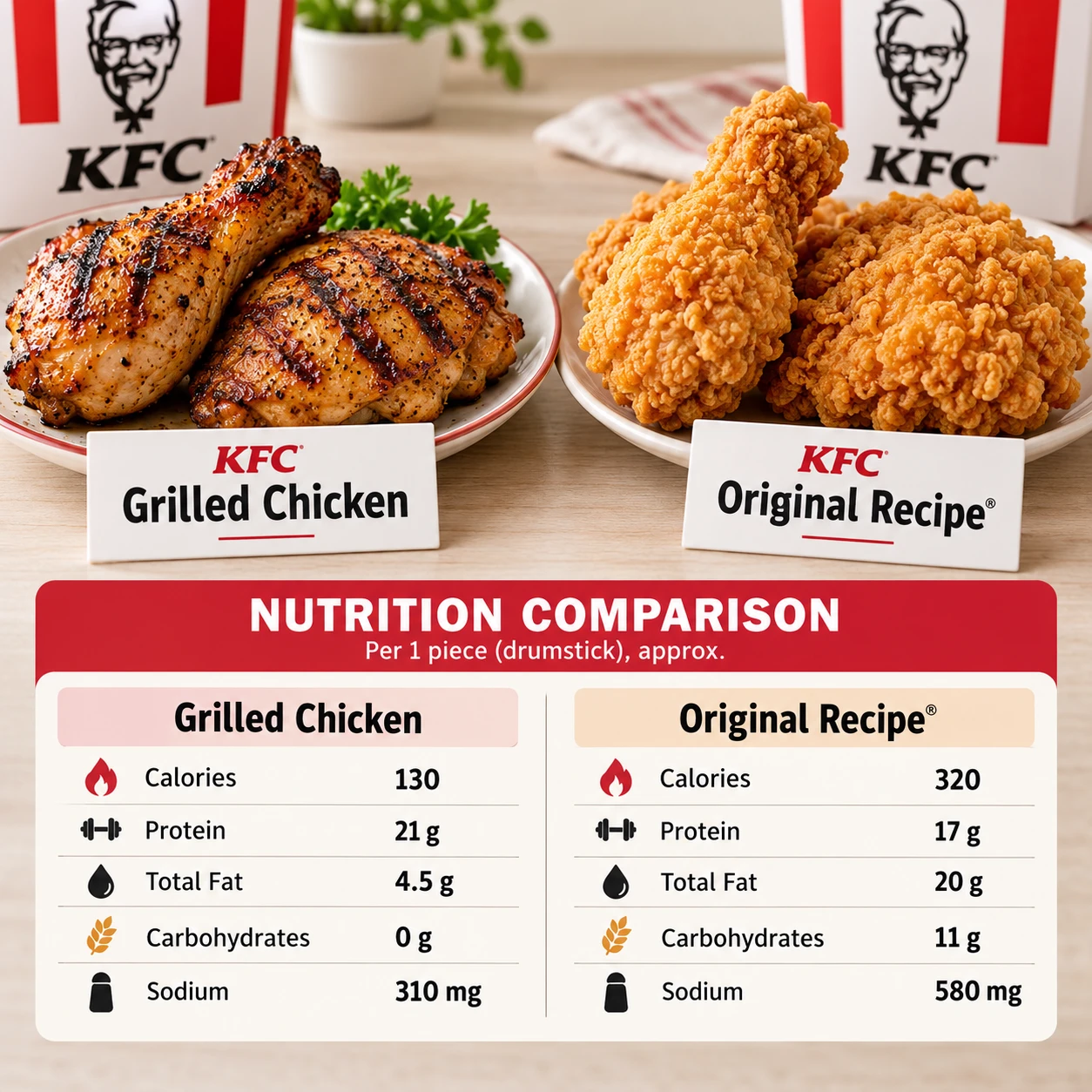
Choosing between KFC Grilled Chicken and Original Recipe chicken comes down to more than calories. Preparation, chicken cut, serving size, sodium, and the sides or sauces you add all affect what ends up on your plate.
There is one important caveat: KFC’s menu and nutrition information can change, and Grilled Chicken may not be offered at every location. Check the current nutrition details for your market and compare the same cut and serving size whenever possible. That gives you a fairer picture than comparing, for example, a grilled breast with a breaded thigh.
What’s the Difference Between Grilled and Original Recipe Chicken?
KFC Grilled Chicken is cooked without the Original Recipe’s flour-based coating, while Original Recipe chicken is seasoned, breaded, and fried. The different preparation methods affect the texture, flavor, carbohydrates, and often the total fat and calories.
Original Recipe chicken is known for its seasoned coating and crisp exterior. The breading contributes carbohydrates and can absorb some frying oil. The amount varies with the piece, its size, and how it is prepared.
Grilled Chicken has no fried breading, so it typically has fewer coating-related carbohydrates and a different texture: browned and savory rather than crisp. Grilling does not automatically make every serving low in calories or sodium, though. The chicken cut, seasoning, skin, and portion size still matter.
For a useful comparison, match the cut first. A breast generally contains a different amount of meat and energy than a drumstick or wing. Then check whether the published serving includes skin and how KFC defines a serving. Comparing equal weights of edible chicken is even more precise, but restaurant nutrition listings may not provide that format.
How Their Nutrition Compares
The nutrition difference between grilled and Original Recipe chicken depends on the exact cut and serving size; use KFC’s current local nutrition information to compare calories, protein, total fat, sodium, and carbohydrates side by side. There is no reliable single figure that applies to every piece or market.
Use this checklist when checking KFC’s official nutrition information or menu guide:
- Calories: Compare the same chicken cut and number of pieces, not a meal with an individual piece.
- Protein: Check the amount per piece or serving. A larger portion can have more protein simply because it contains more chicken.
- Total fat: Look at the full serving, including any skin or coating listed. Frying and cut size can influence the result.
- Sodium: Seasoning and preparation contribute sodium in both styles. A grilled item should not be assumed to be low-sodium.
- Carbohydrates: Original Recipe breading generally contributes carbohydrates; grilled chicken without breading usually has fewer.
For current figures, consult KFC’s official nutrition information for the country and restaurant where you plan to order. If the site lists nutrition per piece, compare like with like. If it lists a serving with multiple pieces, use the same serving size for both options. Regional recipes and menu formats can differ, so numbers from another country or an older menu may not match your order.
A handy rule is to compare the whole order, not just the chicken. A lower-calorie piece can be part of a higher-calorie meal once you add fries, a biscuit, sauce, and a sweetened drink.
Calories, Protein, Fat, and Sodium: What to Notice
Calories, protein, fat, sodium, and carbohydrates each tell you something different, so no single nutrition number explains which KFC chicken choice is best for you. Read them together and consider the portion you will actually eat.
Calories and protein
Calories estimate the energy in a serving; protein indicates how much of this nutrient it provides. A larger chicken piece may deliver more of both, so calories alone can make a larger portion look worse without showing its protein contribution. Compare the same cut and serving size before drawing conclusions.
Total fat and carbohydrates
Original Recipe’s breading and frying can increase total fat and carbohydrates compared with a similar grilled piece. The exact difference depends on the product and portion. Grilled chicken can still contain fat, especially when served with skin, and its seasoning may add sodium.
Sodium
Sodium deserves attention in both versions. It comes from seasoning and preparation, and it can add up quickly across a meal. KFC’s nutrition listing is the best source for the specific item; do not infer sodium content from a grilled appearance or assume that removing breading will meaningfully reduce it.
These numbers are most useful as a set. If you are comparing meals, include the sides, condiments, and drink in your review. The chicken may be the main choice, but it is only one part of the total nutrition profile.
Which Option Fits Your Goals?
Grilled Chicken may suit someone looking to avoid fried breading, while Original Recipe may appeal to someone who prefers its crisp coating and seasoned flavor. The better fit depends on your priorities, the actual nutrition listing, and the rest of your meal.
- If you want fewer breading-related carbohydrates: Grilled Chicken is the more direct choice when available, because it is not coated like Original Recipe chicken.
- If you are comparing calories or fat: Check the same cut and portion in KFC’s current nutrition information. Grilled preparation may help, but it is not a guarantee that every grilled serving has fewer calories than every Original Recipe piece.
- If protein is your priority: Compare protein per serving and select a portion that fits your appetite. A larger piece can provide more protein along with more calories.
- If sodium matters to you: Check the listed sodium for the chicken and the complete meal. Consider how many pieces, sides, sauces, and other salty foods you are ordering.
- If flavor is the priority: Original Recipe offers a crisp, seasoned coating; grilled chicken has a distinct roasted flavor. Choose the one you will enjoy, then make any adjustments you want elsewhere in the meal.
These are general menu comparisons, not medical advice. People following a medically prescribed eating plan should use the current product information and ask a qualified health professional how to interpret it for their needs.
Make Your KFC Meal More Balanced
You can make a KFC meal more balanced by choosing a portion deliberately, adding a side that suits your needs, and checking sauces and drinks rather than focusing on the chicken alone. Small ordering choices can change the meal’s total calories, sodium, and carbohydrates.
Try this simple plate-and-add-ons check before ordering:
- Start with the chicken: Decide on the cut and number of pieces. If you want to avoid breading and the item is available, consider Grilled Chicken.
- Choose a side with purpose: Compare available sides and their nutrition details. A salad or vegetable side can add produce, while a larger or fried side may increase the meal’s calories and sodium.
- Review sauces and condiments: Sauces can add calories, sugar, or sodium. Ask for them separately when that option is available so you can control how much you use.
- Think about the drink: Water or an unsweetened drink avoids the added sugar in many sweetened beverages. Check the menu for current choices.
- Order the portion you plan to eat: If a meal includes more chicken or sides than you want, look for a smaller option where available rather than relying on willpower after ordering.
There is no single ideal KFC order for everyone. A practical goal is to decide what matters most for this meal, whether that is flavor, avoiding breading, managing portion size, or keeping an eye on sodium, and make one or two choices that support it.
Availability and Nutrition Details to Check
KFC Grilled Chicken availability and nutrition details can vary by location, menu cycle, serving size, and chicken cut. Check the current local menu before planning around it, and use the listed facts for the exact item you intend to order.
Restaurant menus change, and an item available in one region may be absent in another. Nutrition information may also be updated when recipes, serving definitions, or product offerings change. A search result, old menu image, or nutrition chart for another country can therefore give you the wrong comparison.
Before ordering, verify:
- Whether Grilled Chicken is currently available at your restaurant.
- The exact chicken piece, portion, and serving size listed.
- Whether the nutrition facts refer to chicken alone or a complete meal.
- The nutrition details for sides, sauces, and drinks you plan to add.
When the menu does not provide directly comparable servings, treat the figures as estimates for decision-making rather than a precise head-to-head test. The most dependable comparison is the current official information for the same market, cut, and serving size.
Frequently Asked Questions
Is KFC Grilled Chicken still available?
Availability varies by country and restaurant, and it may change over time. Check your local KFC menu or contact the restaurant before relying on Grilled Chicken as an option.
Which KFC chicken option has fewer calories?
It depends on the specific chicken cut and serving size. Grilled Chicken may have fewer calories than a comparable breaded, fried piece, but check current KFC nutrition information for a like-for-like comparison.
Does Original Recipe chicken contain more carbohydrates?
Usually, the breading on Original Recipe chicken contributes carbohydrates that unbreaded grilled chicken does not. Check the local nutrition listing for exact amounts, since recipes and serving sizes can vary.
How can I make a KFC meal lower in sodium?
Check sodium for the chicken and every add-on, including sides and sauces, then choose a smaller portion or lower-sodium options where available. Nutrition details vary, so use the current local menu rather than assuming grilled chicken is low in sodium.